
Tel: 212.736.2727
news@dssimon.com
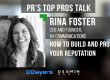
PR’s Top Pros Talk… Navigating Rapid Change with Strategic Communication
>> Listen to the episode on Spotify, Apple Podcasts, and others.

TRANSCRIPT:
DOUG: Great to have you on the podcast. And I think a great starting point would be if you give sort of a quick overview of your career path, because it’s not just a pure PR play.
JON: That is definitely true. And thank you so much for having me. I really appreciate it and looking forward to this conversation. So, in all honesty, I don’t always talk about this, but when I graduated from college, I didn’t even have a job. In fact, I didn’t even look for a job and sat on my parent’s couch for a couple of months until my mom said, you got to get up and do something. And so, my first job was a stock boy at the gap, uh, folding clothes in the back of the room. My mom was very influential in the beginning of my non career, um, getting me an opportunity to work for this private cable TV station, being a segment producer for a talk show, which was fascinating. Then I decided I was going to go to law school. I bartend and waited until I got into law school. I went to Cardozo Law School, came out and got a job at Wild gotcha. And Maggie’s big firm, did that for about three and a half years and really, really enjoyed it. And the budget was nothing to do with the law. The but was it was during the.com boom. And I, a lot of my friends were getting involved in.com. So, I ended up leaving while uh, and starting a company called Blaze Ventures. When we started it, it was supposed to be to advise startups on everything from raising angel investing, to which law firms and accounting firms to work with, to how to build out the operations, which in all, you know, I didn’t really have any experience in but was young and naive and thought that I could figure that all out. And I raised money about $500,000, closed a few days after the market crashed. And as we were putting our business plan together, we were, I had a technology team external, uh, that we outsourced. And I said to them, you know, I’m really frustrated because as we’re going back and forth with the business plan, I keep getting comments from like one of my team members and another team member, and I got to match it all up. I’m like, isn’t there like some web-based platform we could put the document on and everybody could just go into it and mark it up, and so we could see what’s happening and they’re like, oh yeah, we can do that. So, we shifted when the market crashed from doing the advisory to the software platform and the software platform a little bit ahead of its time, probably more like Google Docs today, but didn’t really work. Well, we did a couple of beta program beta testing programs with Columbia Business School and Why Got Ya’ll. It didn’t really work. I couldn’t raise more money. My wife got pregnant with our first child, so I left and went to Kirkland and Ellis and was at Kirkland for 20 years.
DOUG: Which is also a law firm.
JON: Yeah. Sorry. Big law firm. Uh, and I did I was, did corporate restructuring. So, big bankruptcies, out of court restructurings, crisis. Uh, and that’s what led to C Street, because when I was doing that work, we would always bring in PR professionals to work with us. And I found them all, you know, to be good, but I didn’t find them to dive into the situation, really understand it, work with the lawyers, the bankers, the financial advisors and the company to put together a cohesive, comprehensive strategy for communicating. And so, I found myself doing a lot of that, and I thought there was a void in the market to be able to step in. And so that’s one of the reasons I started C Street there were more to it, but that’s how I got into this.
DOUG: It’s sort of interesting and makes a lot of sense. When I had a chance to interview Hal Berson back in the day for a podcast I was working on. The key thing he said was the first thing was, do the people understand the business that they’re trying to advise? And that’s something that can get lost and be hard to have when you’re working on so many different types of accounts to really become an expert in that field. So given what you’re doing in the path you’ve taken, you’re advising a lot of CEOs, C-suite executives. What are some of the key points that you’re giving to them in this time of change?
JON: Communications is not a nice to have, and it’s not just an overlay where you’re putting out a press release and that’s the answer. In good times, when things are going well with the company, maybe it is, but even then, it’s not. It’s really part of the fabric of everything that’s happening. And, and it’s really the connective tissue of it all. So, what I try to tell people is I ask them, I say, you know, when you say something or when you don’t say something, you’re communicating and you want to be really thoughtful and intentional about how you do that because your stakeholders, your employees, your customers, your vendors, they all are looking to you for what is happening with your company. How are you positioning it? If you’re doing a transaction, why are you doing that transaction? Why is it good for them? Or is something maybe not so good for them? They’re also looking to you, so it’s so important to get it right. It’s so important to be thoughtful. It’s so important to make sure that the entire team, both internal and external, are all on the same page. So, everything is consistent and everybody’s hearing the same things. So, we always talk about that. One example I give when I was a young lawyer at Kirkland, we had a we had a situation where we were representing a company and we and the financial I’m sorry, the investment banker got up and gave an entire presentation to about 80 banks of a bank group. And it was a presentation about the business plan for the company. And when we finished. The CEO of the company said, um, okay, thank you all for being here. But before you leave. You just heard the investment bankers business plan. Now, let me tell you mine. And it ended chaos because who are we supposed to believe? And I remember that for it was such a lesson for me that everybody has to be in sync. And you have to be able to be telling the truth and authentic and authentic message, but it has to be consistent. Everybody, whether you’re the lawyer or the banker or the CEO, you know, the employee that’s on the ground talking to a customer. Everybody has to be saying the same thing. Otherwise, people will get confused and that hurts the company.
DOUG: Yeah. So, how do you go about creating that sync? Because what you’re talking about is different people who’ve obviously had enormous success in their specific areas of expertise. And there’s clearly overlap. You know, is it just the CEO having that power to say, we’re doing everything my way? How do you create a collaborative environment but still get everyone on the same page?
JON: I think it’s relationship driven like everything else. And so, when you get involved in a situation so let’s say let’s say today we start a new situation, we’re going to do a kickoff call. And that kickoff call will be with the management team. It’ll be with the lawyers, it’ll be with the financial advisors. And we’ll say, okay, we need to get a huge download. Tell us about the company. Tell us what’s going on, why we’re here, what you need help on. Tell us how lawyers, what transaction is taking place. What’s the timeline for it? Financial advisors tell us about the liquidity and everything else. So, we’re getting that full information. We’re pulling everybody together. Then when we put together and put pen to paper and say, here’s our message set that we believe what we heard from you. Read it. Let us know. Let’s talk about it because we want to make sure we got it right. We talk it all through. So, everybody’s part of that process. And now once we have it all set and we build it out for all the different stakeholder groups, and we make it dynamic because as the transaction or the situation evolves, so does the communication, but it needs to evolve in a in a way like you are telling a story. Everybody’s involved that knows about it. And once you start building that relationship and everybody sees that you’re being collaborative, everybody sees that you have everybody’s back. I find it very easy to have everybody working together.
DOUG: Yeah. And clearly now you’ve got the leadership team on the same page, which is job one. Obviously, a problem if you don’t, but that is to extend throughout the company. And that can often build tremendous challenges with the what we can call the rank and file. In this case, the workers are actually getting the stuff done, especially on the various sides of the companies. So, how do you then filter that message internally? Because it’s so easy. It seems these days to be thrown off by what people see on social media. So, how do you get that consistency? Can it be just top down or can it also be like bottom up?
JON: Great question. So, first I would say this that it’s challenging because whether it’s a restructuring, a crisis, an M&A transaction, a litigation, you have employees who are also being concerned for what does this mean for them. So, it’s they are going to need to be communicating, but they also need to be communicated to what we would typically be advising is the CEO or the management team itself needs to be communicating directly to the its employees. In today’s world, usually that’s through some sort of town hall. Once that is communicated to the whole organization, now we need to figure out who is on the front line, right? Speaking to vendors, speaking to customers, speaking to each other, speaking to partners and making sure that they have at their disposal the tools necessary to communicate well. So, we put together the talking points for them, but it’s not just handing them talking points. We will get onto the ground with them to say, let’s work through this and talk it through. So, if you have questions or when you do get a question that you might not know the answer to. How do you stay on script or somebody that you’ve known forever who’s like, wait, wait, come on, tell me what’s really going on? And the answer to this is what’s really going on. So, we’re there with them.
DOUG: It better be what this is what’s going on, or else you’ve just blown the whole thing
JON: 1,000%. And so, we’re there with them to make sure that it is all working as smoothly as possible. And if something happens because things do happen where there’s a bump or somebody makes a mistake. We need to be prepared for that as well. To be able to jump in and fix that quickly. Because generally, I mean, and you’ll know this, usually people get in trouble by something happens and they don’t address it. They want to ignore it. So, making sure you’re ready to address it. And even if that’s an apology or there was a mistake owning up to it. It’s I believe it’s all about authenticity.
DOUG: Authenticity is key, even if it’s, you know, a whole different kind of authenticity. You’ve been active in the political sphere. Is there anything you’ve learned from that experience that you’re bringing to your advisory role?
JON: Another reason that I started C Street was getting involved in the political world, and I was very involved with Kamala Harris 2019 2020 campaign. And I saw with Kamala, and I think this happens with, with politicians, but also with companies. When she came out of the gate and announced that she was running and she gave her speech in Oakland. It was this incredible speech. It was authentic. It was strong. It laid the case out. You know, as a former prosecutor, she laid the case out of here’s what she was going to prosecute. And people really bought into it. And she started to move up as she saw as she got bigger and now more people were around her and there were more, you know, more people talking to her, more.
DOUG: And scrutiny.
JON: More scrutiny and but also more pressure. It’s very difficult for a candidate to say, but I’m going to stay in my lane and keep saying what I’m saying, even though I’m going to take some hits. I wish she would just continue to say, be the person that I know, be the person that when I’m sitting with her, I’m hearing because that’s not what people are from her. And so, I do take that into the into the business world because it is the same thing, you know, if it’s your company, you know your company better than anybody. You know how it’s positioned, you know where you want to take it. And so, coming up with that communication about it and positioning it, you can do that in such a strong way. But then you have to stay on the path. You know, if you’re going down a path in a crisis pops up. Well, what are your values? Who are you? What is your company? We just dealt with this right at this moment because of the tragedy that happened yesterday in the shooting 35 Park. You know, our employees. We just moved into a new office building, right. Our front door of our office building, you know, on the floor we’re on. It’s not secure yet. We’re working with the security company to get it done. So, I just sat down right before we got on and sent out, you know, a slack message to everybody at the team. And I said, you know, I know, you know, based on what happened yesterday, I know everybody’s nervous. People are scared. People are sad. I know, you know, you all know that we don’t have the security in place yet. I just want everybody to know if you’re not comfortable, go work remotely. Right at the end of the day, you’re the safety of our employees and the comfort of our employees is the most important thing. It matters more than anything else. So, go do that. And I get it because I have the same feeling you’re having. You need to keep your values, and you need to always remember what the people who are not in control of all the decisions are feeling. And, you know, then you have to communicate the right way because it’s very easy, you know, for me to like, walk in and not think about it and just kind of go on with my day, do this podcast, you know, go try to bring in some more business. But my job as a leader is to make sure that my people are feeling good, secure, and safe.
DOUG: Yeah. And thank you for ranking the podcast higher than going to get new business. And that one I appreciate that quite a bit. And as we wrap up the conversation, um, going forward. And you’ve covered a lot of different advice for people. Um, what do you see changing in this environment? Because it is from day to day things shift, even the event and obviously this was recorded shortly after the unfortunate New York shooting, it’s changing so rapidly. How do you keep pace and keep on track when the environment around you feels like it’s very transitory?
JON: I think part one are the things that happen day to day that you have no control over, but can have an impact on your company, whether it’s directly on your company or whether it’s just kind of out there and people are concerned and there. I think it’s really for leaders. It’s about, again, thinking about your culture, thinking about what matters, thinking about your values and making sure you’re always focused on what your team is thinking, feeling. And so, you can address that, address it quickly and address it powerfully. I think it’s so important. Second is the world in general and communications with social media with AI with, you know, all the new technologies, with how fast news travels and also how quickly it can go away. Thinking about and I think there’s a good example, you think about the Coldplay concert, right. One, that flew through social media. So I mean, it becomes such a story. Everybody knew that more people knew about that than things that are truly impacting, you know, our country and our world every single day. Second thing was it went away almost just as fast. We’re not like watching it so much anymore, right? Like, the memes have kind of gone have less. Third, the company itself. I don’t know if you saw this, but I thought it was really genius. They put an ad at Gwyneth Paltrow to come out and, you know, talk about it. So, they used this situation for them, this kind of crisis. They totally turned it into an opportunity for the company up and forth. And I really do think this and this is what I in today’s world, often I see people forget and I think I forget, but you also have real people and real families that were involved in it. And because of social media, they’re all like pariahs and you know. Oh, now we saw pictures.
DOUG: He lost his job.
JON: He lost his job. And what’s going on with his family? And it’s so there’s no privacy anymore. It’s all just out there. And, you know, this is I don’t know anything about the two people, but I assume he, you know, he loves his family and he had a bad situation. And it’s going to be a really tough thing with his family. And it may not work out. And but there’s so much there that we oftentimes forget because the world’s moving so fast and everything’s in our face and everything’s now a meme as opposed to, you know, thoughtful. And I think for businesses as they’re communicating, you do need to think about that because the attacks that can come on social media that you need to be ready for all that the leaks, all the all now because the press is running for stories. So, put out that they’ve got half the information. The other half is not there. That other half maybe the most important thing to your company. Because that’s what’s telling the company. No, we have I mean telling your stakeholders we have everything under control, even though the press just wrote us. You got to be prepared and ready and understand again, back to almost the beginning. Communication and being strategic and tactical. It is the fabric of everything that you do. It underlies everything.
DOUG: Well, you clearly have control of your narrative. And thank you for sharing your insights with our audience. Great to get to know you better.
JON: Thank you so much. I so appreciate you inviting me on. And big fan of yours. So, thank you. Thanks means a lot.